

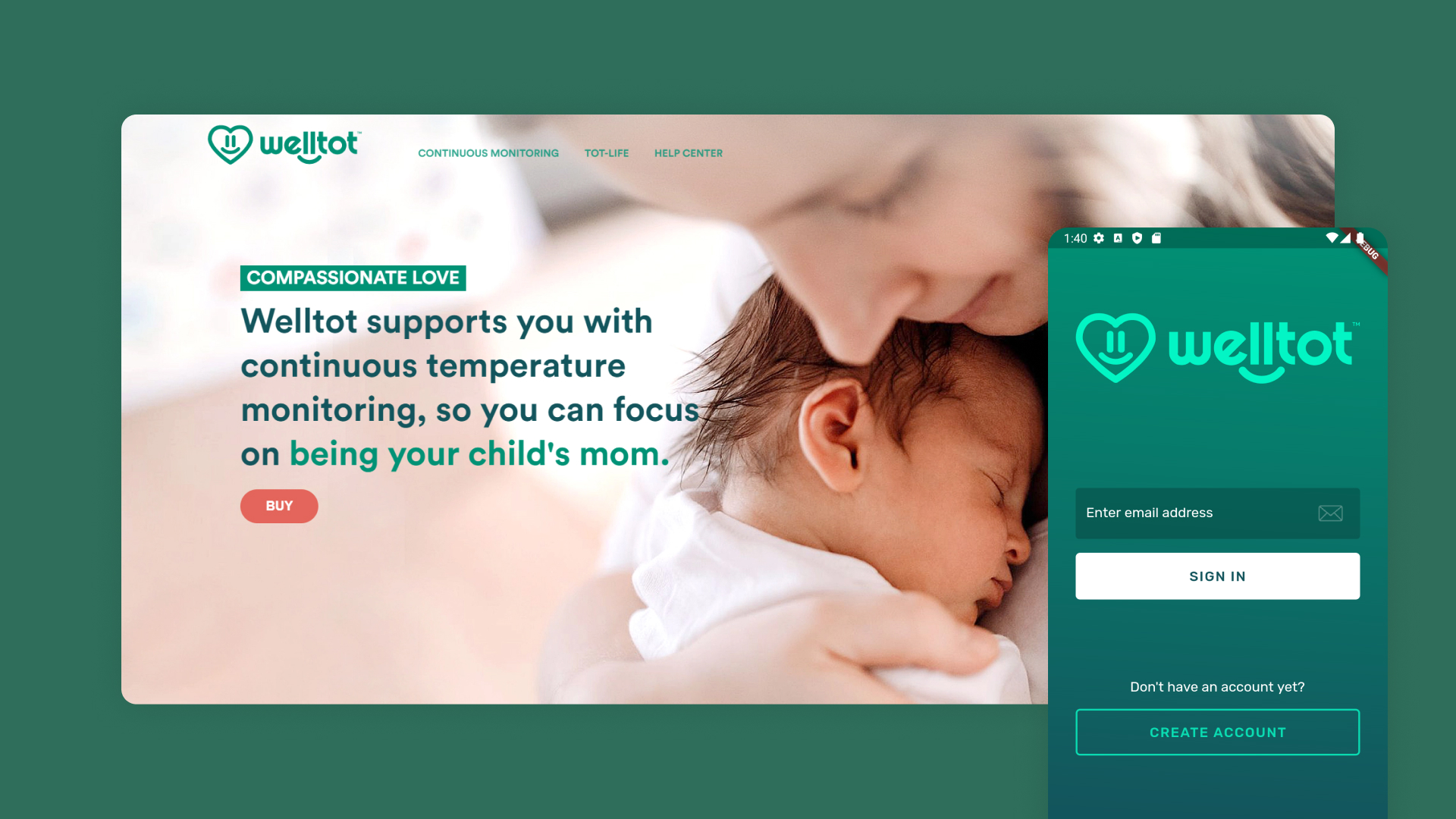
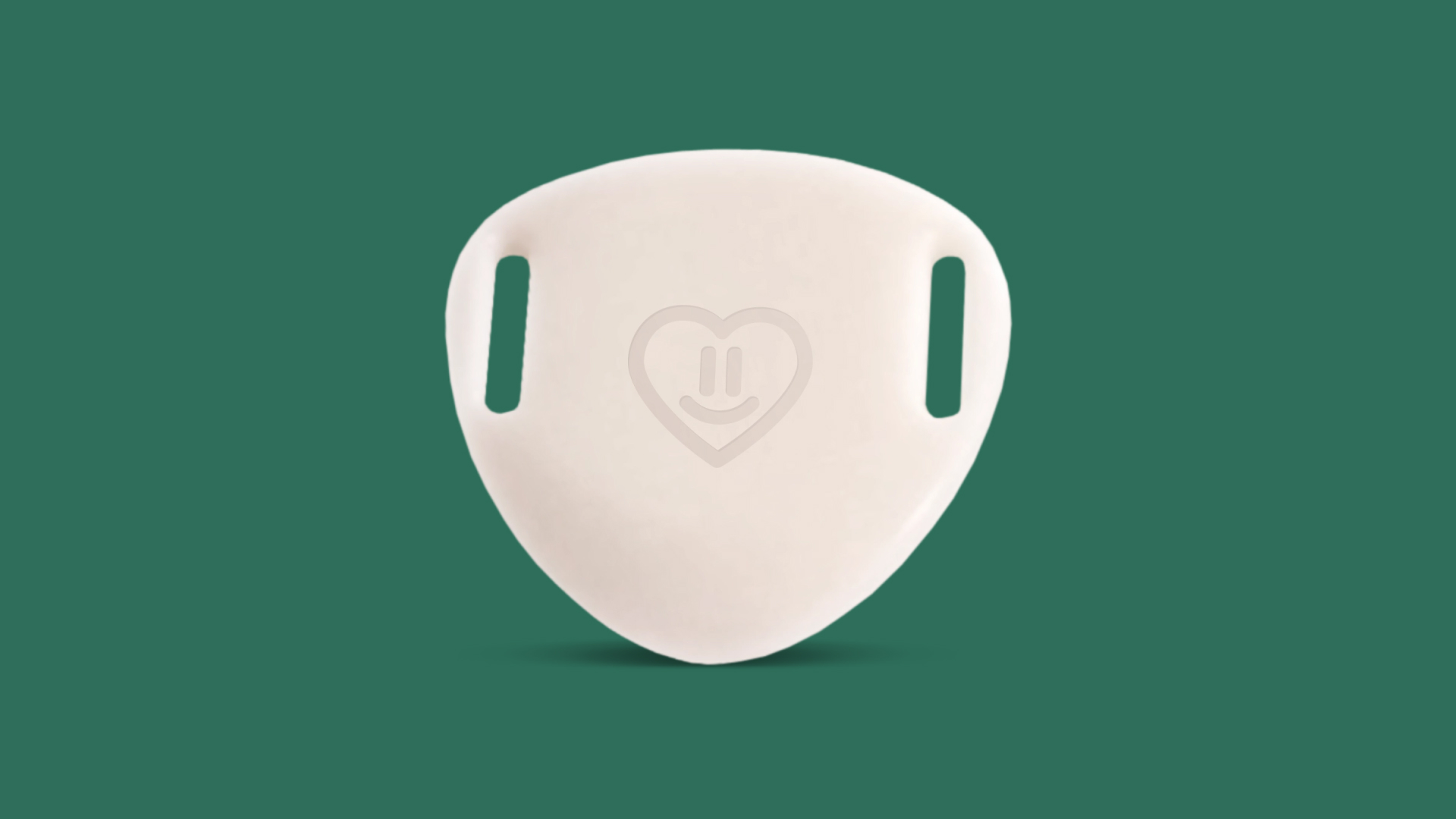
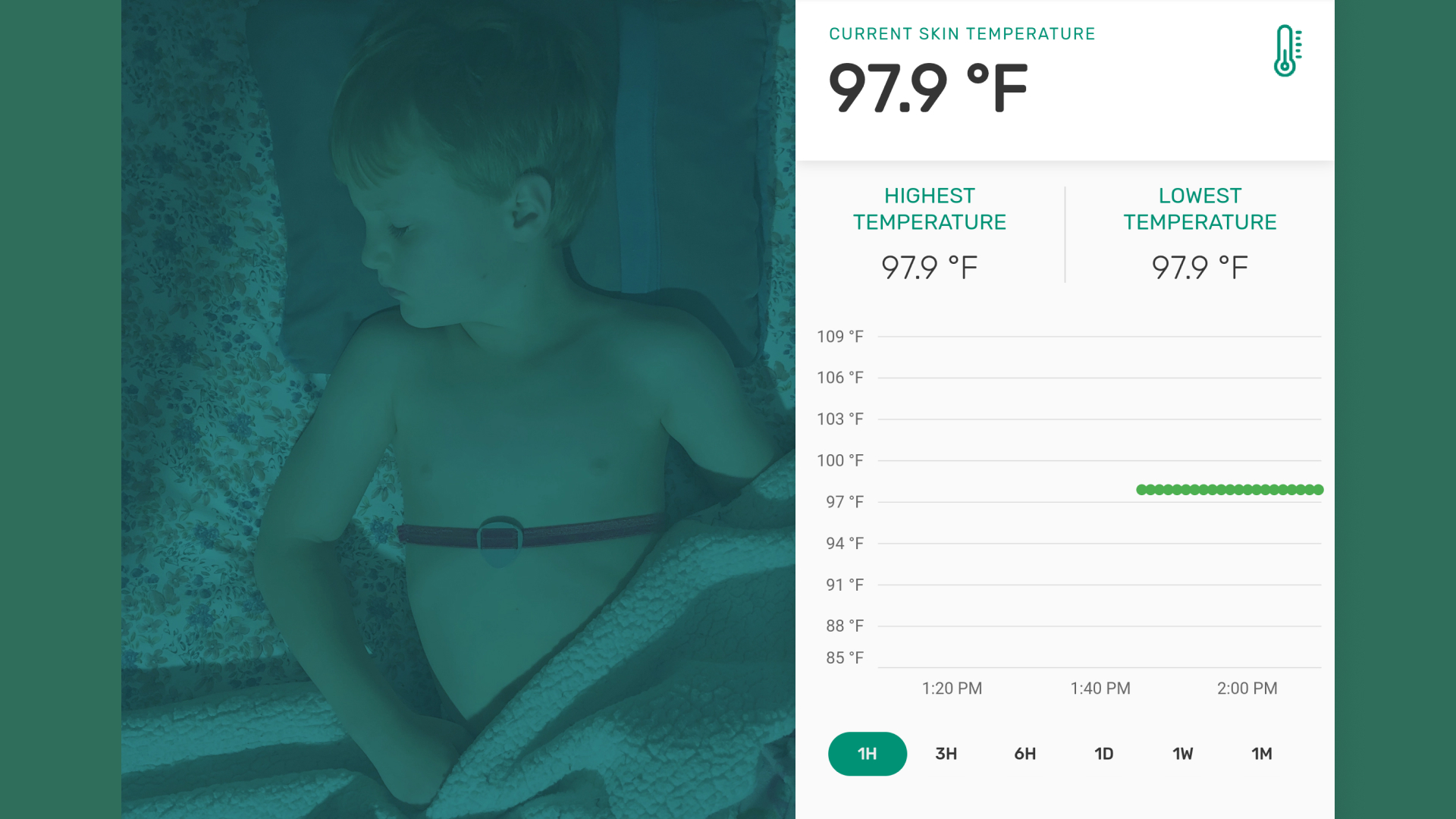
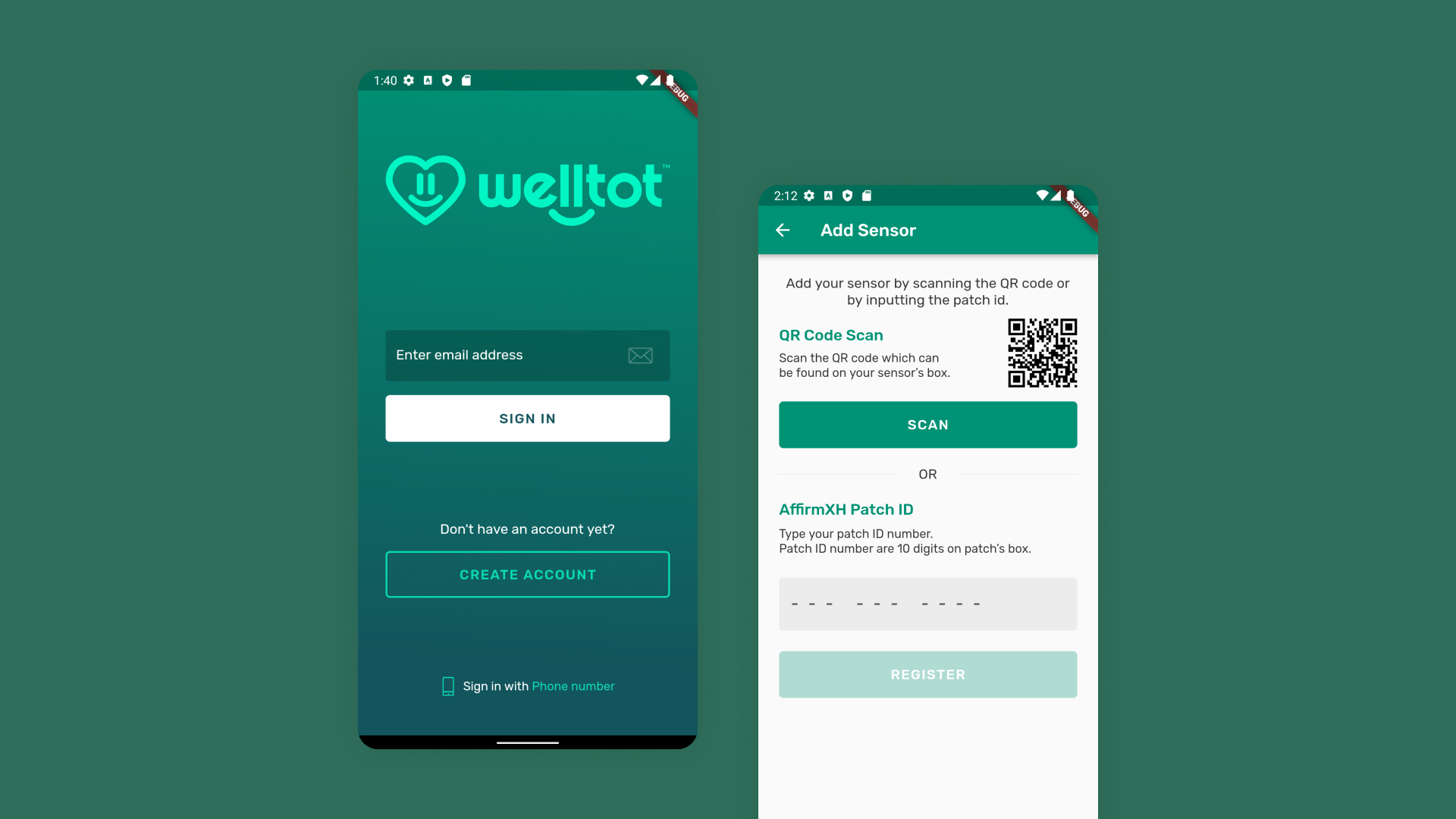
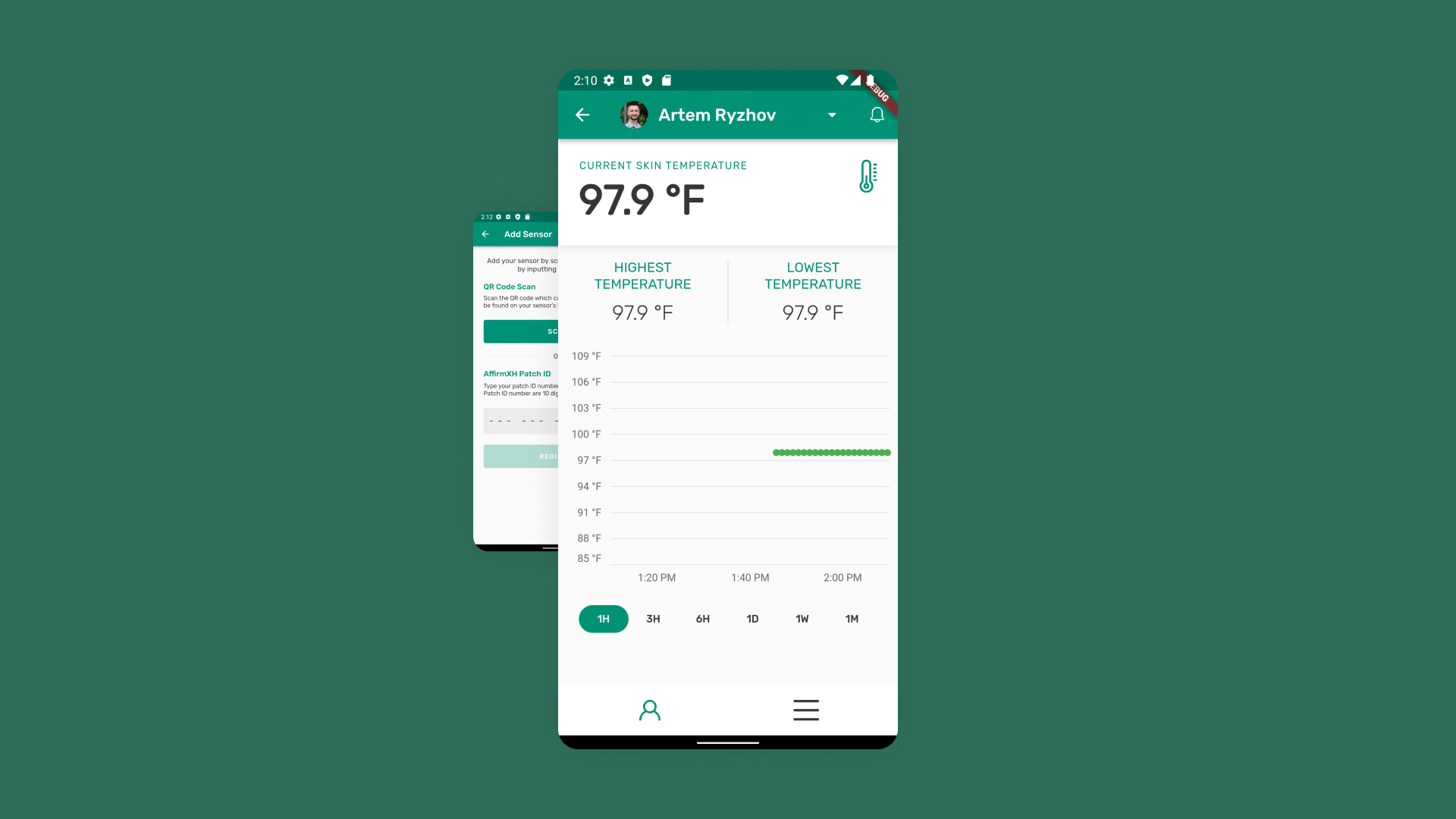
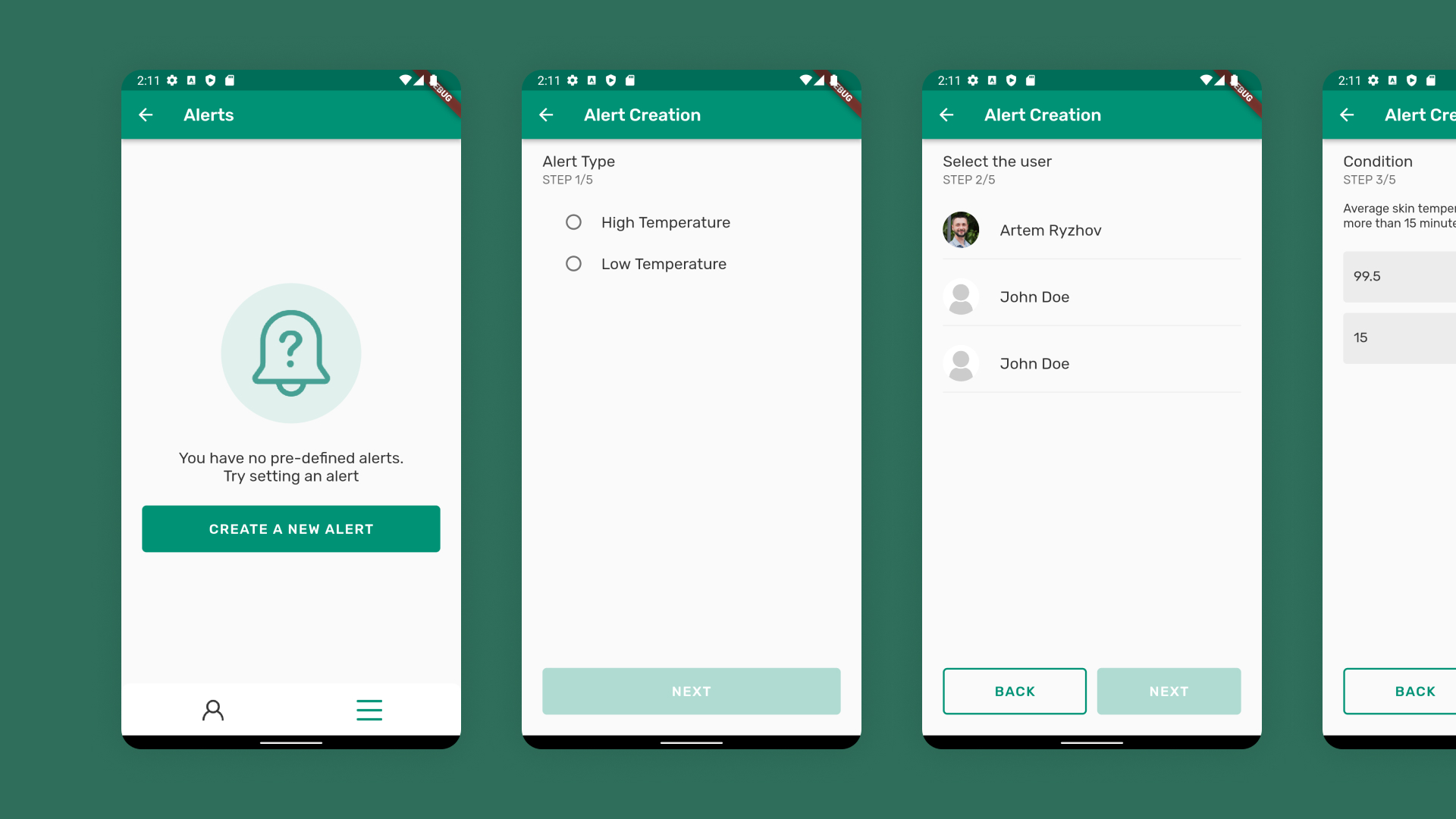
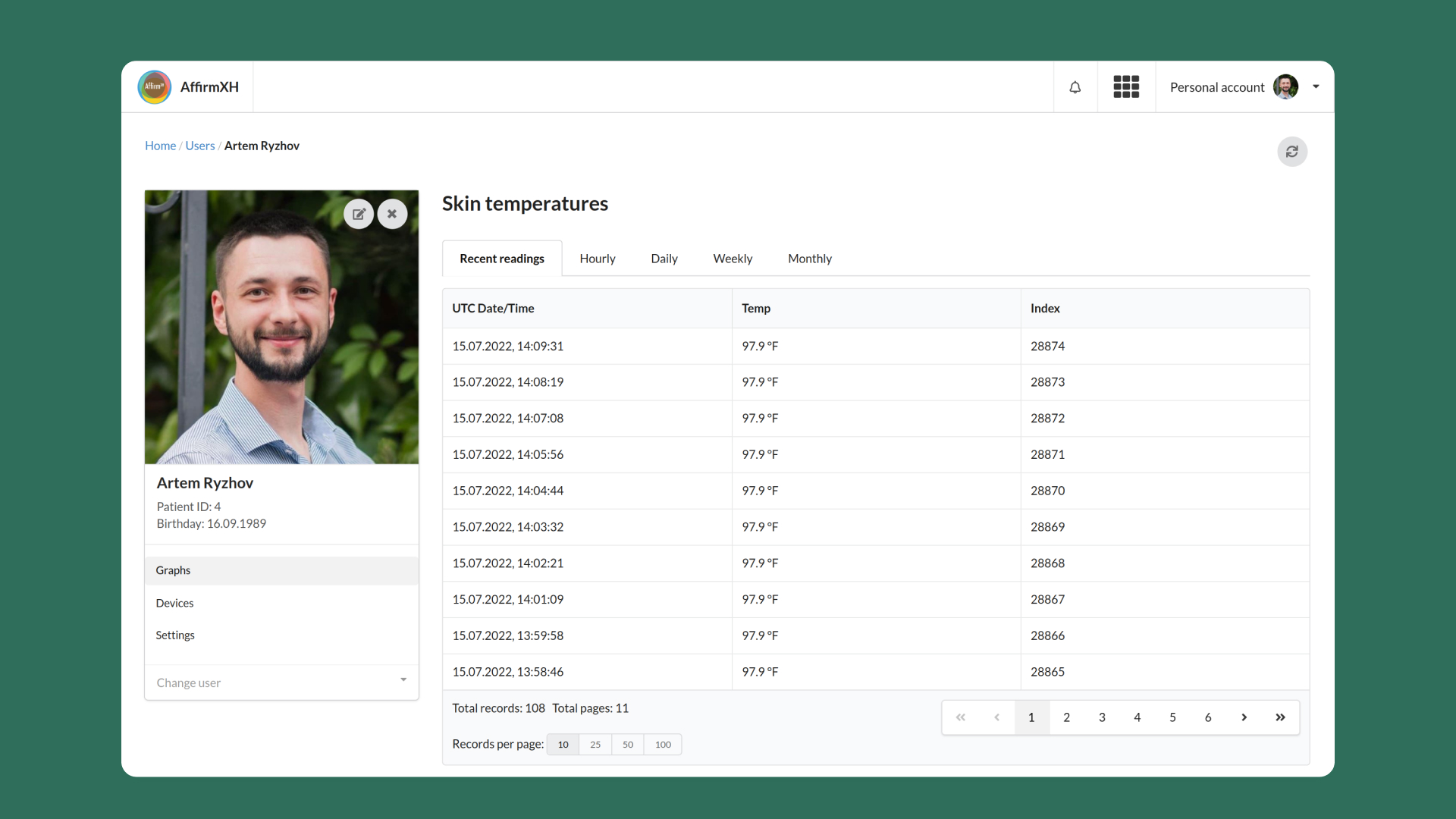
The system reads measurements from a body-mounted sensor at a set interval and writes the data to the database. The user can monitor temperature in real time, configure high-temperature alerts, add other family members to the account and share data.
Task
Our task was to develop the backend with a scalable architecture and headroom for peak loads. During the work, we implemented several important technical solutions.
API for mobile applications
The client already had an MVP on Node.js, so we did not change the stack because it was a good fit for the task. The project was fully converted to TypeScript, existing modules were rewritten and refined, and new ones were developed.
A key requirement was complete and up-to-date API documentation, because another team was working on the mobile application and the collaboration needed to be smooth. For this, a mechanism for generating documentation from the code was implemented. Thanks to this, after changes are made to the source code, the documentation remains up to date and the method descriptions stay complete.
For convenient testing and development, we configured several environments so the mobile app team could work comfortably and the client could present the product to business partners at any time.
Scalable architecture
The application runs in a reliable, time-tested environment — Amazon Web Services.
The backend consists of many microservices, each responsible for a separate function. To process a large number of requests and scale automatically as the project grows, we chose AWS Lambda as the environment for running functions. This Amazon solution helps reduce the cost of configuring and maintaining servers, letting the team focus on business tasks.
Reliability
To ensure reliability, we used the available AWS mechanisms and configured backups.
Fault tolerance
- Replication of databases in multiple regions
- Search index replication across multiple regions
- Automatic horizontal scaling using Lambda functions
Backup
Despite the measures taken to ensure uninterrupted operation, there is always a risk of an unexpected incident.
For this scenario, critical data backup and recovery mechanisms were configured.
Centralized system log
For quick and convenient analysis of errors and other events, we configured centralized log storage and log delivery from all microservices. For sign-in and access distribution, we configured unified SSO and implemented a custom Identity Provider that is also used in other company services.
Monitoring system
We configured key metrics to track system health.
Test coverage
Critical business logic and the API are covered by automated tests, which helps maintain a high level of quality and avoid critical errors during development.
Administrative interface
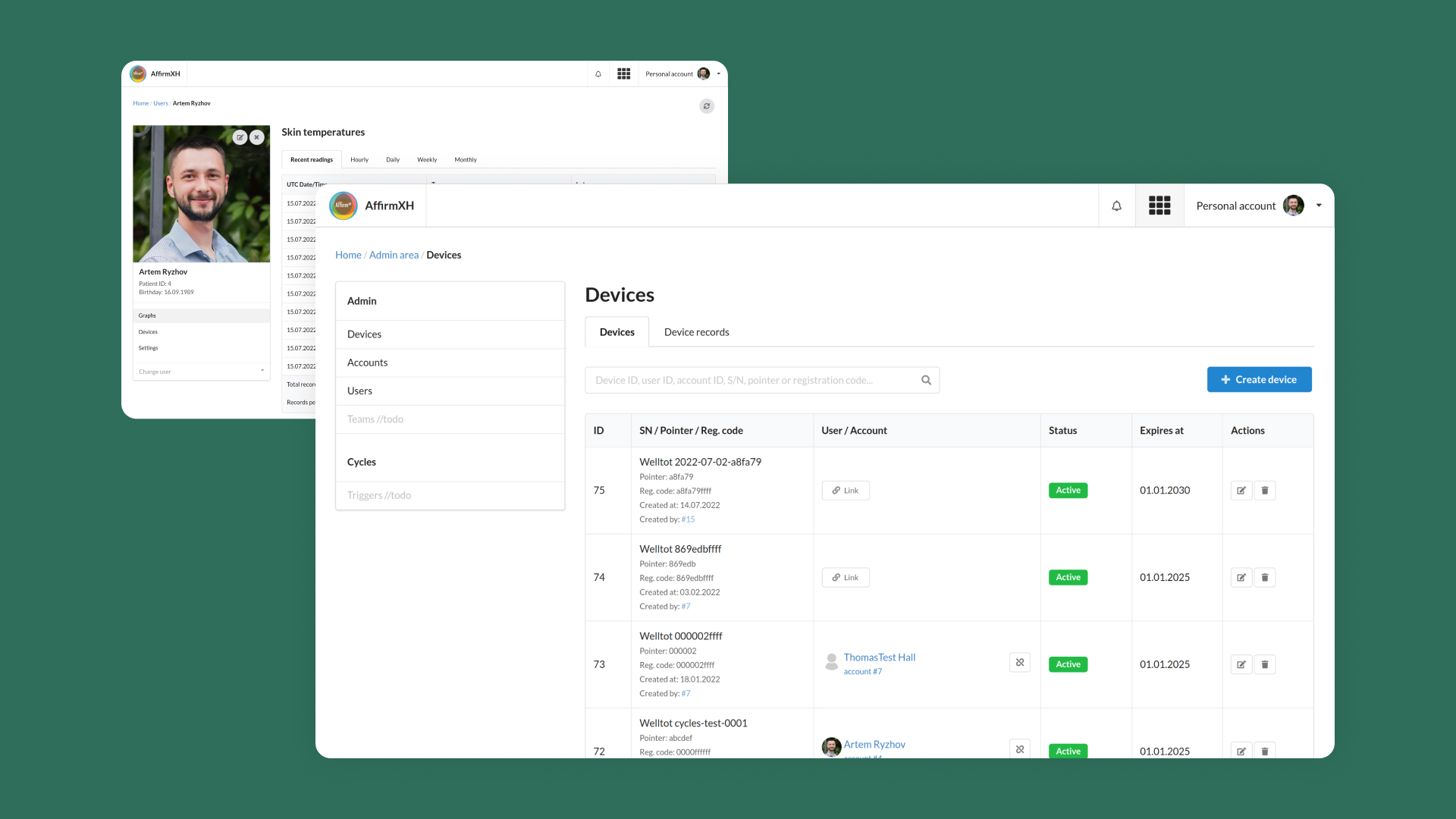
To manage accounts, users, devices and other system elements, we developed an administrative interface in React: fast, convenient and responsive.
Result
As a result, the client received a scalable backend platform for a mobile product, ready to work with data from body-worn sensors. The project continues to grow and is preparing to enter the US and European markets, while we provide technical support, add new functionality and improve the existing product.