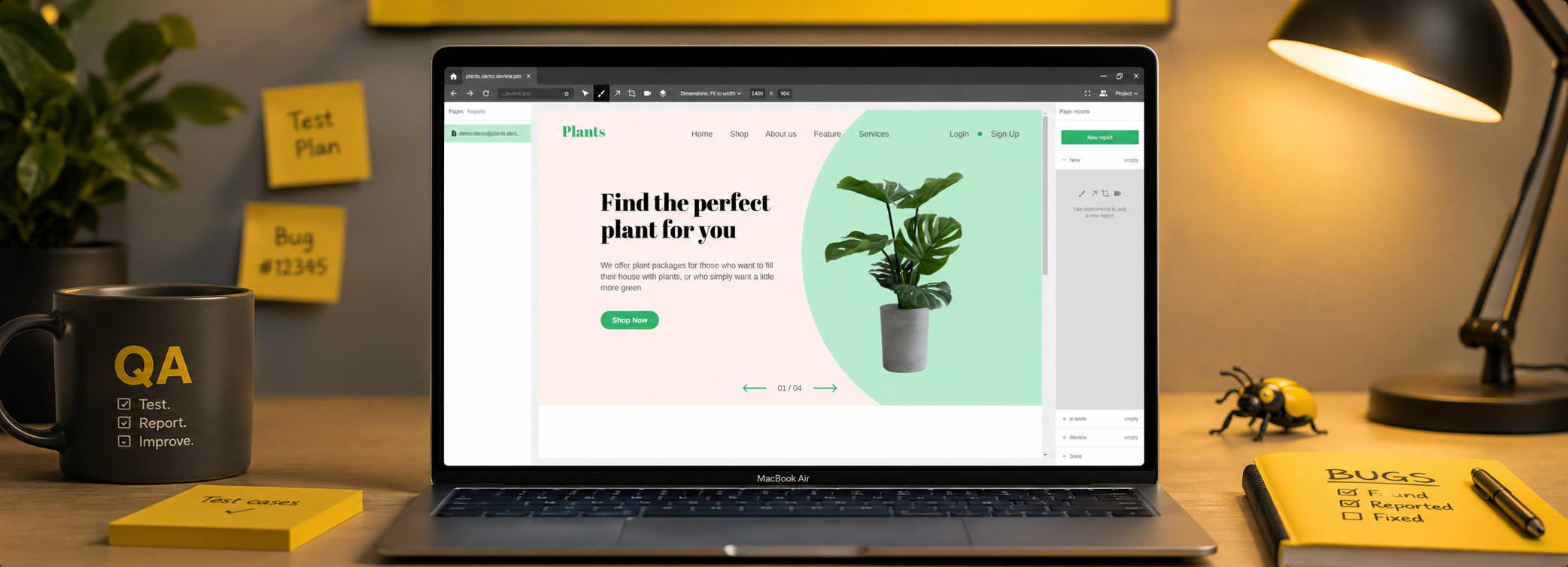

Reporter is a desktop app for professional testing of websites and web applications. It combines a browser, visual QA tools, and a reporting system so testers can capture issues without switching between many separate services.
We developed the product as a QA team workspace: convenient for everyday testing, clear for managers, and useful for developers who receive structured reports with issue context.
Task
The task was to create a tool that shortens the path from a discovered issue to a ready report for the development team. A tester should see the site structure, check pages at different screen sizes, record video, take screenshots, work with page elements, and immediately document issues.
A separate requirement was to preserve the familiar testing flow. Reporter had to feel like a browser while providing more specialized QA features, from design overlays to a team report board.
Tester workspace
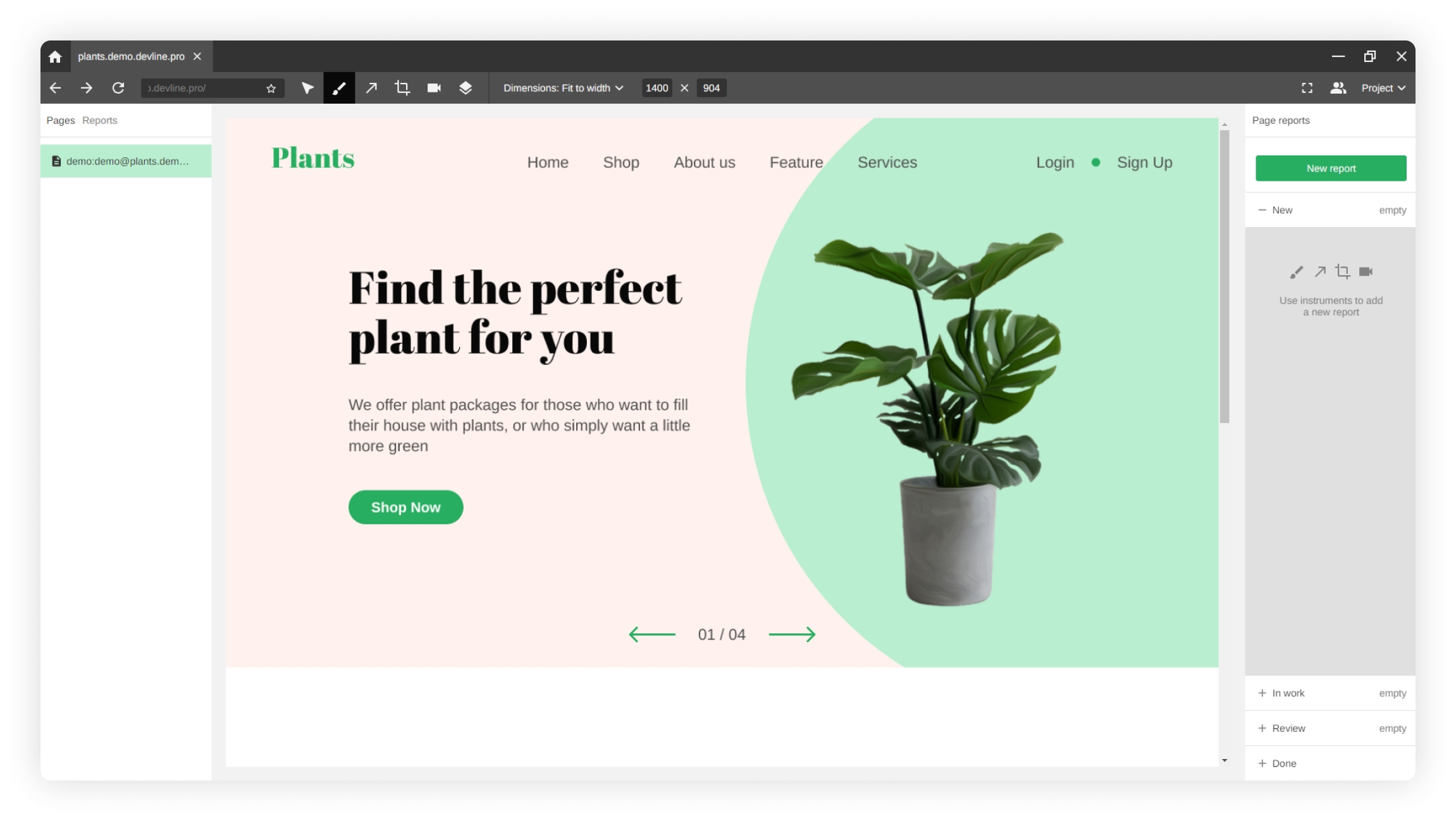
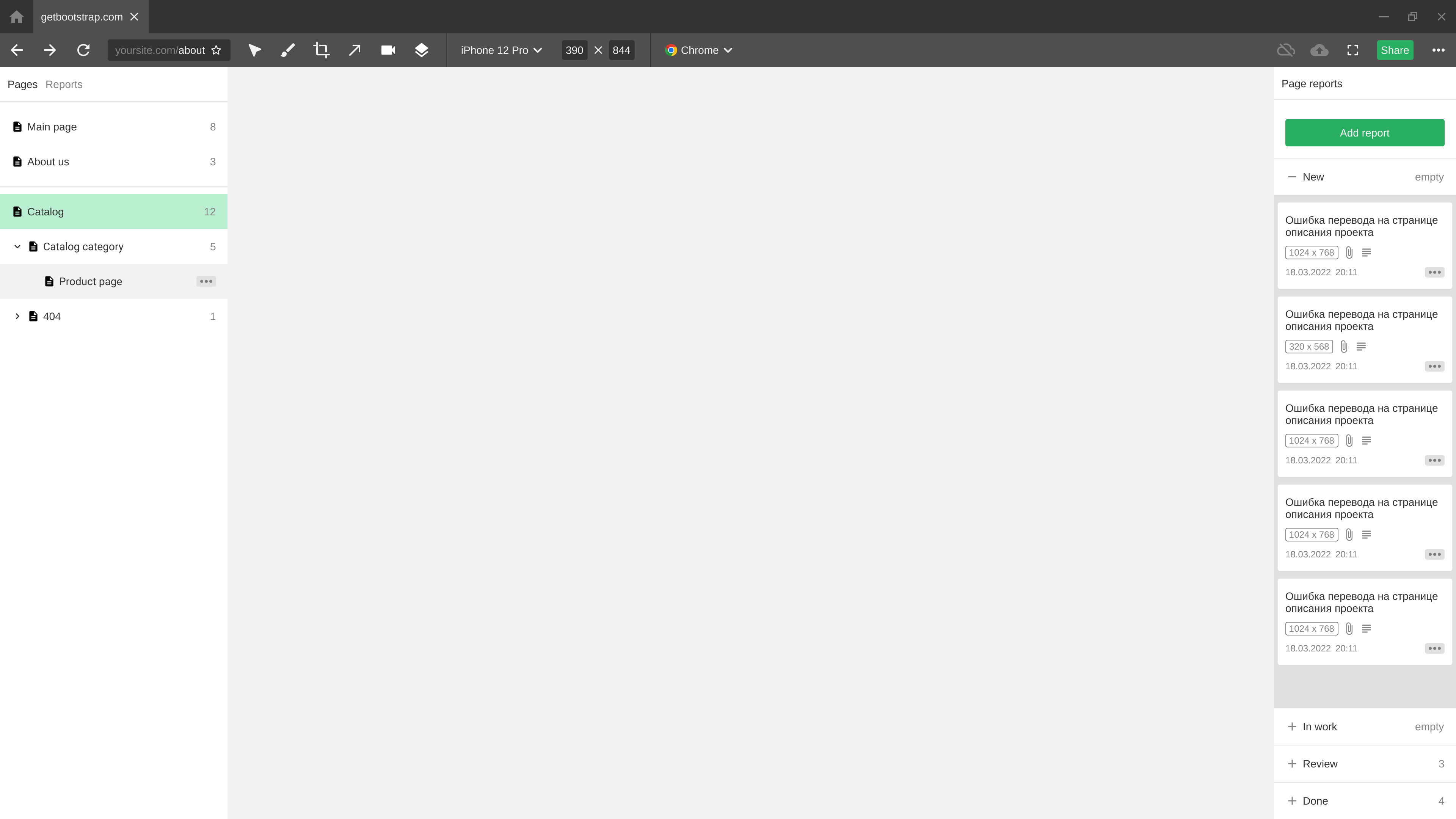
We built the app around an embedded browser. The top bar brings together the key tools: page navigation, device and resolution selection, video recording, screenshots, element inspection, and layout overlay mode.
This lets a tester check responsiveness, compare implementation with design, capture the issue, and keep the context of the page where it was found.
Bug reports
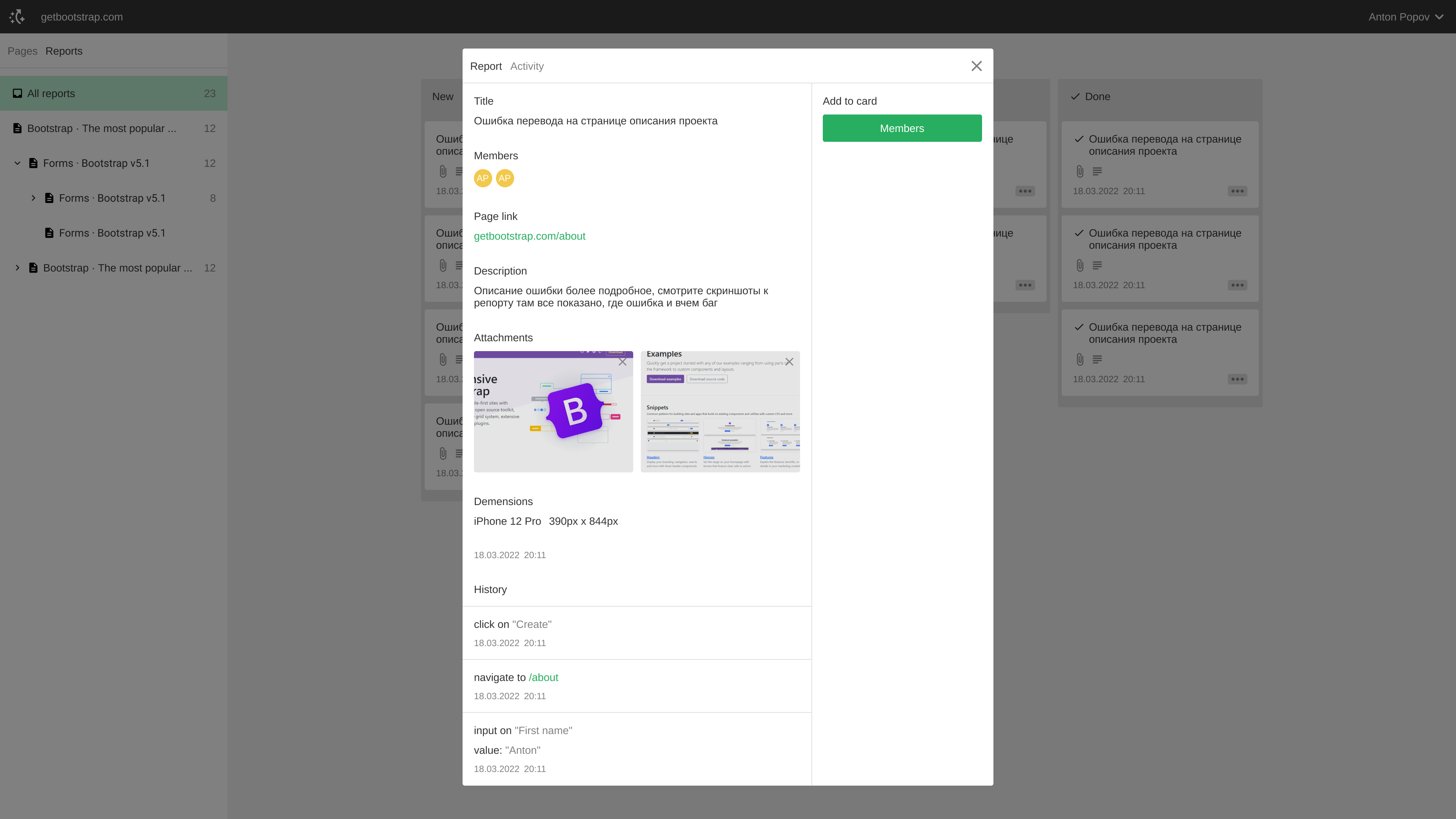
Each report is tied to a specific site page. It can store a description, screenshot or video, screen resolution, browser, creation date, and other details a developer needs to reproduce the issue quickly.
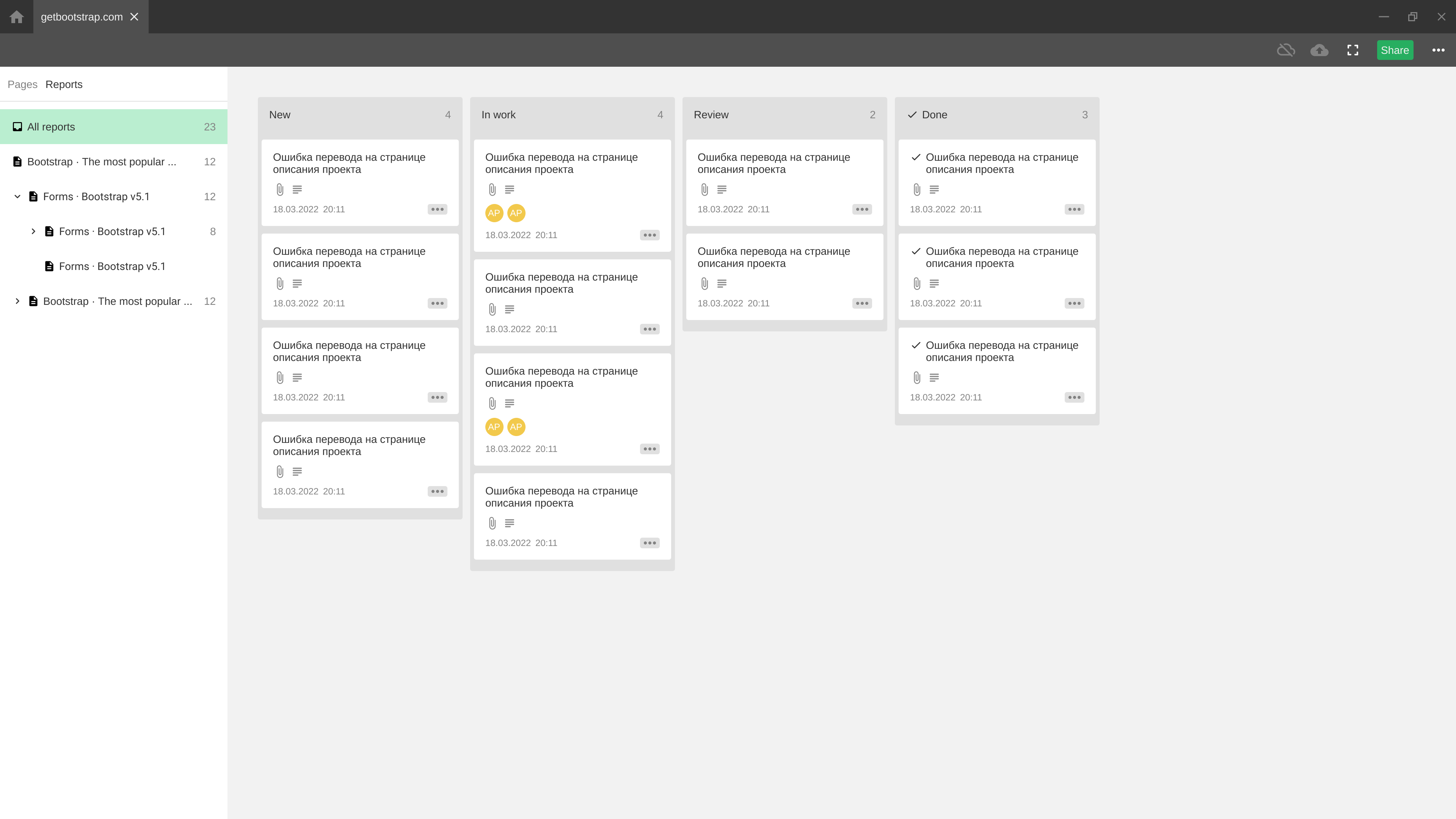
To handle many tasks, we implemented a status board. Issues move from a new finding to review and completion, while the team can see workload by page, priority, and state.
Automated checks
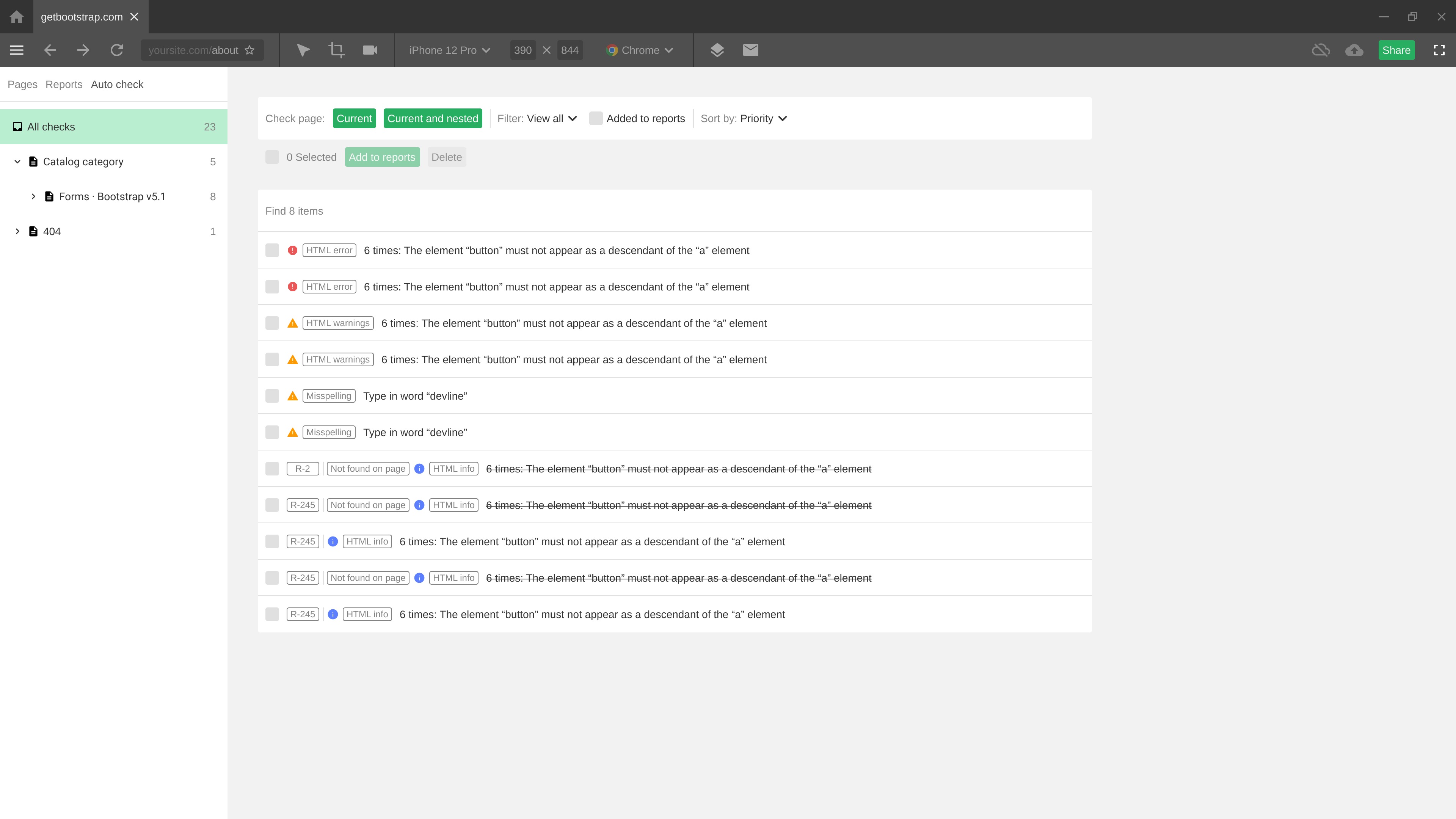
To remove part of the routine from testers, we added automated page checks. The app finds HTML errors, warnings, problematic text, and other recurring defects, which can then be added to reports or filtered by type and priority.
Checks can be run for the current page or for the current page together with nested pages. This is useful for quickly auditing site sections before passing tasks to development.
Teamwork
Reporter helps synchronize testers and developers. The QA team creates reports during testing, while developers receive not an abstract description, but a specific page, status, attachments, and technical conditions where the issue appeared.
We built a simple status model into the interface: new bugs, tasks in progress, fix review, and completed reports. This keeps the process transparent and helps retain small but important defects.
Result
The result is a product that turns website testing into a coherent process: finding an issue, capturing it, adding materials, passing it to the team, and tracking the fix can all happen in one app.
For users, this saves time on routine work. For the development team, it means clearer tasks, fewer clarification cycles, and faster bug reproduction. That is how we designed Reporter: as a practical tool for web product quality.